
What Indiana Property Tax Records Contain
Indiana property tax records tell one connected story across three county offices. The assessor sets the value. The auditor applies deductions and certifies the net figure. The treasurer bills and collects. A parcel lookup works best when it starts with the county that holds the land, though the state search offers a shared entry point. Many people search Indiana property tax records by county first, then follow the trail from the assessment card to the bill and the payment record. One result rarely answers everything. A value record explains the assessment, while the treasurer confirms the amount due and whether a payment posted.
| Field | What It Shows | Where |
|---|---|---|
| Assessment year and gross value | Land and improvements before deductions | County assessor; DLGF Assessment Search |
| Parcel key and legal description | Local identifier and land description used to match county records | County card; auditor or GIS record |
| Deductions and net value | Applied reductions and certified taxable base | County auditor and assessor |
| Bill and installment status | Amount billed, paid, unpaid or delinquent | County treasurer; DLGF tax-bill lookup |
| Tax district | Local units tied to the parcel's tax bill | County record and DLGF tools |
| Tax-sale notice | Parcel, balance, notice and county sale details | County treasurer or auditor |
Assessed value is not the amount owed. Neither number is a sale price. Gross assessed value is measured before deductions and adjustments. Net assessed value reflects the reductions used in billing. Credits act later by cutting the tax due. An exemption can make some or all of a property non-taxable under its terms. This DLGF vocabulary matters when you compare an assessment card with a tax statement. Keep the value year beside the bill and deduction record. Indiana property tax records become much easier to read. DLGF explains Indiana's 100% assessment ratio and market-value-in-use standard.
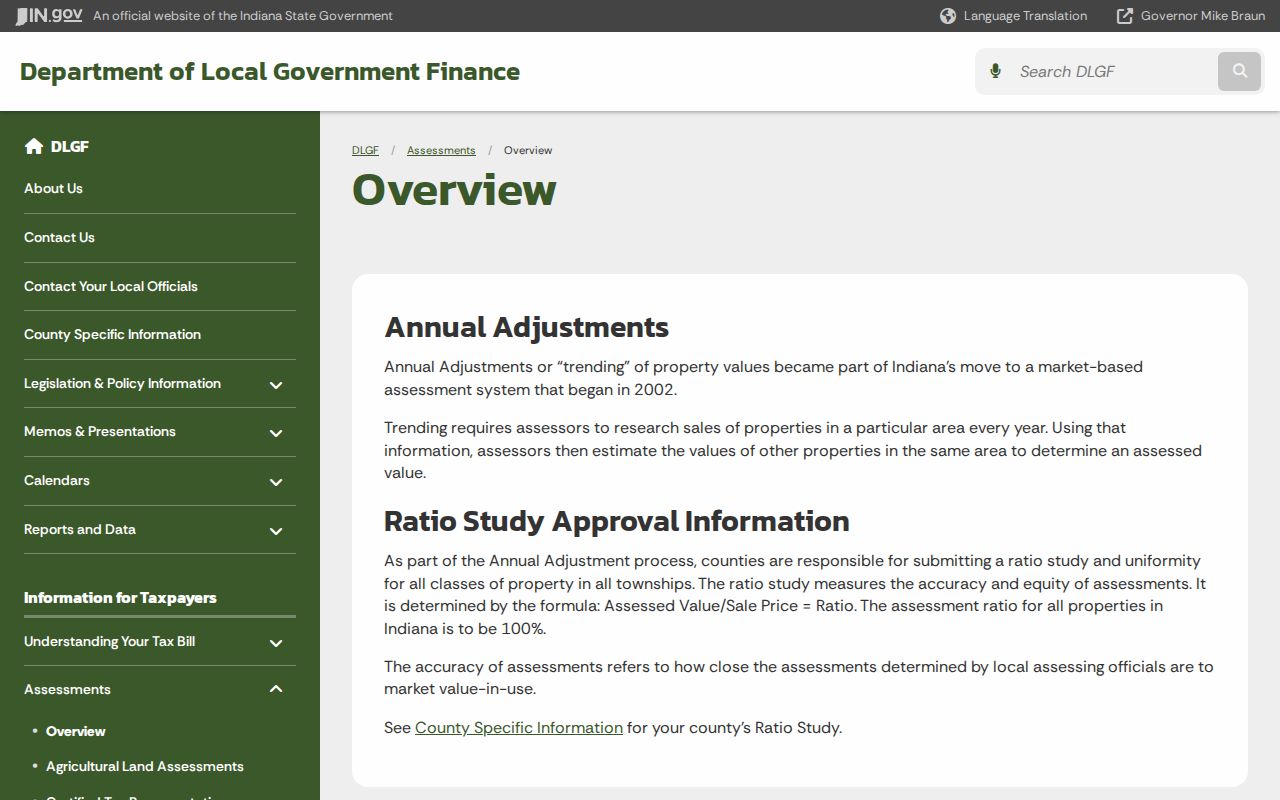
An assessment standard only describes how value is measured. It never states the amount due on a parcel by itself.
How Indiana Offices Divide the Tax Work
Each county office owns one slice of the job. The assessor values the parcel and maintains its property record card. The auditor applies deductions and exemptions. It processes transfers and sales disclosures. It also certifies net assessed value. The treasurer bills, collects, and chases delinquent installments. DLGF offers statewide tools and guidance, but those tools do not replace county records. That division explains why an owner sees different labels or dates on separate screens. Ask the assessor about a property characteristic or assessed value. Ask the auditor about a deduction or tax duplicate. Ask the treasurer about a payment or official balance. A DLGF result is a handy cross-county reference. The county office can resolve missing submissions, local formatting, and account changes.
Search Indiana Assessments by County
The DLGF Assessment Search is a free statewide form with a county selector. Visible fields narrow a search to a parcel, owner, or street. At least one search key is required. The selected county supplies the submitted record behind each result. The form covers five assessment years. DLGF notes that a Details control opens the individual record. Download exports results to Excel.
| Visible Field | How It Narrows a Record | Use |
|---|---|---|
| Assessment Year | Chooses the year attached to the value | Match the year before comparing totals |
| County | Limits results to one of Indiana's 92 counties | Choose the parcel's county |
| Property Type | Optional class such as residential, agricultural or commercial | Use only when the broad result set needs narrowing |
| Property Owner's Name (First Or Last) | Accepts a first or last name | Partial text may help when exact spelling is unknown |
| Property Street Address | Searches street text | DLGF recommends trying a partial street if needed |
| Parcel Number | Uses the county-specific parcel key | Keep local punctuation and leading zeroes |
A result can show owner or taxpayer, parcel number and address, land and improvement components, and total assessed value. It can also show deductions, tax-district detail, and year. County formats vary. DLGF cautions that missing data or formatting issues belong with the county auditor. Start at the Indiana DLGF Assessment Search. Then use the county record for any correction.
Look Up an Indiana Tax Bill
Let the state bill lookup point you to the county source. A payment, penalty, or sale notice may be at stake. So confirm the account with the treasurer in those cases. Indiana tax bills are generally paid in two installments. For the current amount due, the county system is the final word. A statewide summary is not.
- Open the DLGF Tax Bill Search and follow its county-source notice.
- Use the parcel or address details to reach the bill for the right county and tax year.
- Read each installment and payment status, then compare the assessment year shown on the bill.
- Ask the county treasurer to confirm the balance, penalties or delinquency before acting on an old screen or notice.
- Gross assessed value
- The assessed amount before deductions and adjustments.
- Net assessed value
- The base after applicable deductions and adjustments.
- Credit
- A reduction in tax liability after calculation.
- Exemption
- A rule that removes some or all property from taxability under its terms.
The DLGF Citizens' Guide to Property Tax walks through the steps from assessment to billing. County payment portals may add convenience fees, which vary locally. The Tax Bill Search is an access route, not the source of every answer. The DLGF Gateway taxpayer hub also links to tax-bill, assessed-value, sales-disclosure, TIF-parcel, and calculator tools. For a mailed bill, payment receipt, tax duplicate, or older statement, contact the county treasurer or auditor through Indiana MyLocal. APRA supports requests for a county-held historical duplicate or electronic extract. In-person staff can handle a Form 11 or tax-bill question, and a request should name the county, parcel, tax year, and specific record. The DLGF tax-bill lookup page directs users to the local source rather than claiming one state balance covers every county.
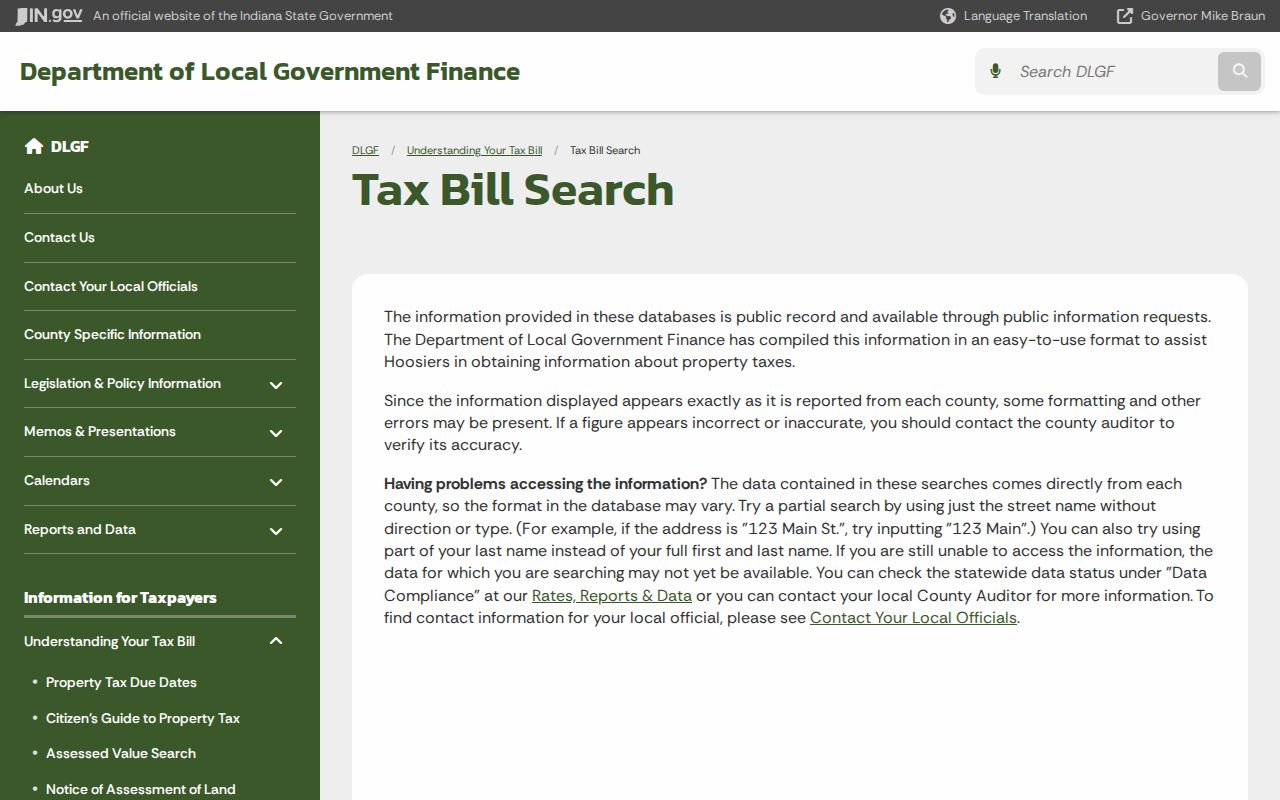
Confirm the current bill, installment, and payment status with the county treasurer's result for the parcel.
Match Indiana's Assessment Year to the Bill
Indiana never labels a tax bill with the year that produced its value. A 2025 assessment backs the taxes payable in 2026. Match those like years whenever you pull a property tax record, or the numbers will seem to disagree. Annual trending leans on prior-year sales to nudge values toward market value-in-use, so a parcel's figure can shift because of the assessment process itself. No sale has to occur.
Reassessment runs on a statewide clock. DLGF's cyclical schedule for 2026 through 2030 opened July 1, 2026, and county assessors now verify property characteristics in the field, covering roughly a quarter of parcels each year. The statewide reassessment page posts maps tracking each county's progress. A shaded county means fieldwork is underway there. It does not mean every parcel moves by the same amount or on the same date.
An individual property record card still carries its own assessment year and county submission. Keep that year attached to the value. An undated number is not automatically the current one. For anyone tracking parcels across several counties, the statewide map is the fastest way to see which assessments are fresh and which are still pending in the cycle.
DLGF publishes county reassessment status maps as part of that cyclical process.
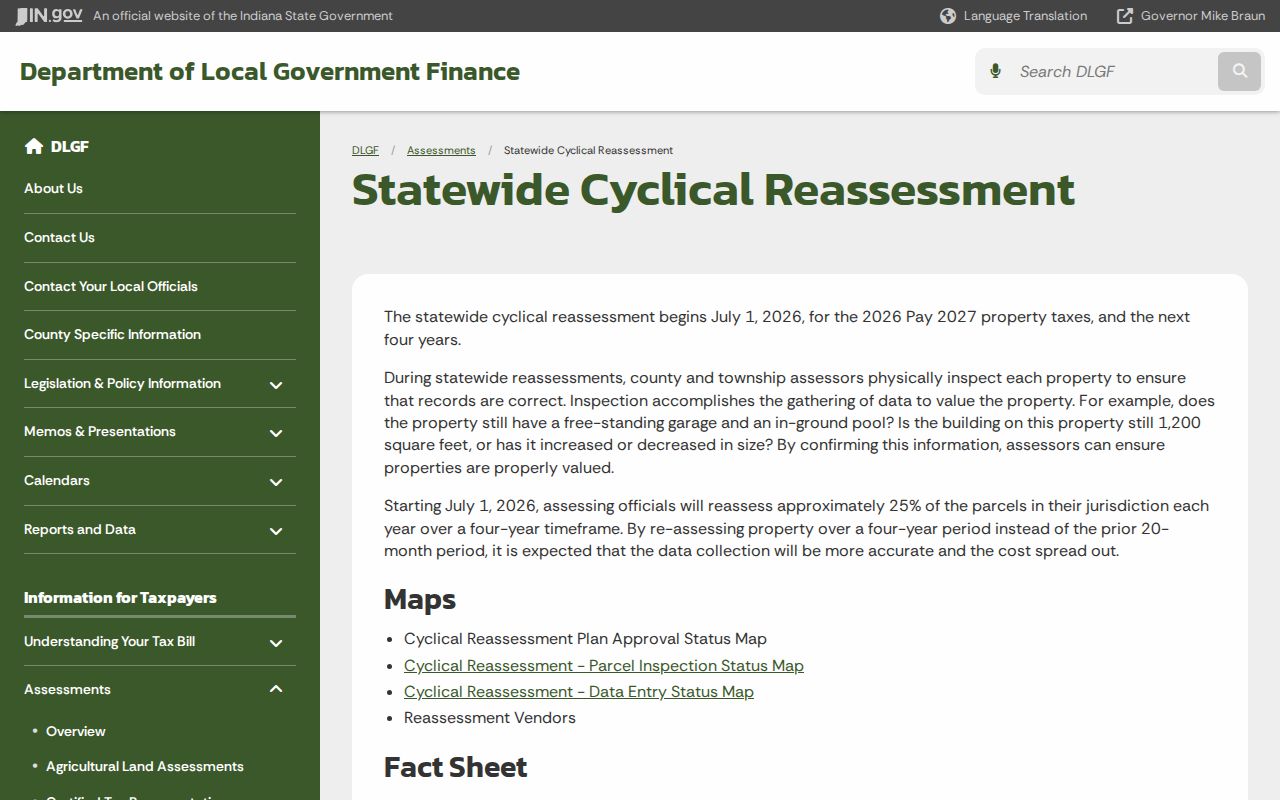
Treat the county map as a timing clue only. Then check the assessment year printed on the parcel's own record before drawing any conclusion.
Separate Indiana Deductions, Credits and Exemptions
These three terms mark different steps in the tax calculation. A deduction lowers the assessed value that feeds the bill. A credit lowers the tax liability after it is calculated. An exemption removes some or all property from taxability under the governing conditions. A homestead deduction entry shows the county applied that deduction, but it does not by itself prove current ownership or occupancy.
| Homestead | Form HC10 covers standard and supplemental deductions; the change-of-use form is separate. |
|---|---|
| Age, disability or veteran | DLGF lists over-65 materials, blind or disabled Form 43710, and disabled veteran Form 12662. |
| Other property programs | Forms cover rehabilitation, historic rehabilitation, heritage barns and enterprise zones. |
| Real-property exemption | Form 136 (09284) is the application; Form 120 (49585) is an action notice, and Form 136-CO/U (54173) covers a change of ownership. |
Every program carries its own application and continuation rules. DLGF sets exemption applications before April 1 of the assessment year, with refiling generally required every even year unless a continuing-use exception applies. Deductions and credits usually stick without yearly reapplication. Still, recheck them after a sale or title change. Check the current DLGF deductions and credits page and the county auditor for any parcel-specific decision.
Appeal an Indiana Assessment Locally
Begin with the county assessor and the notice you are disputing. Form 11 appeals are due June 15. That deadline runs from the year the notice arrives. If no Form 11 was mailed, the deadline moves to June 15 of the next year. Some counties treat the tax bill itself as the Notice of Assessment. Check the notice and its receipt date.
Form 130 starts at the local assessor. It fits valuation objections and objective errors alike. Wrong owner, square footage, or property description counts, as does an omitted deduction, credit or exemption. The state route climbs through an informal conference, the local Property Tax Assessment Board of Appeals, the Indiana Board of Tax Review and Tax Court. Follow current instructions for the right form and level. Save the notice, parcel card, and supporting evidence. The DLGF property tax appeals page supplies Form 130 and the full process.
Check the notice date. The June 15 deadline depends on when Form 11 was received and whether the county mailed it. Confirm the correct filing date and submission instructions with the assessor or DLGF before sending an appeal.
DLGF's appeal page provides Form 130 and local appeal guidance.
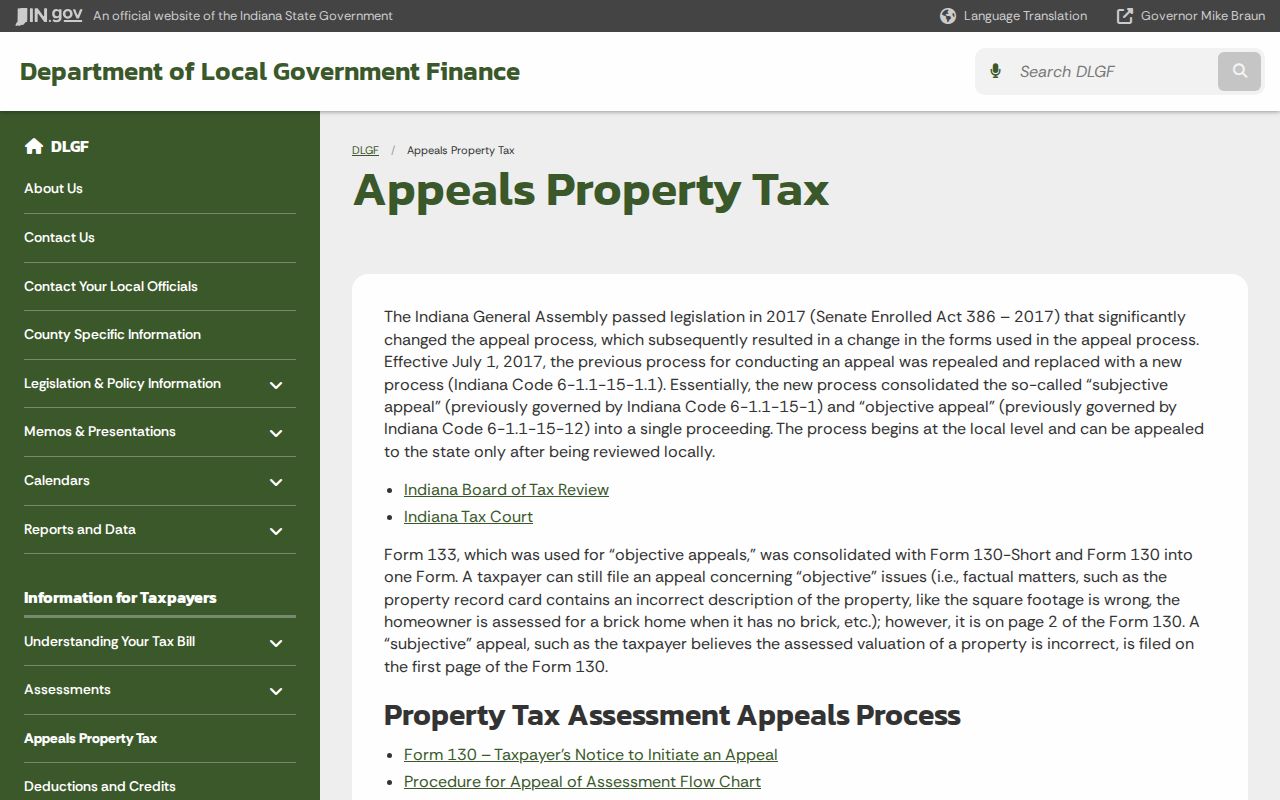
File the notice and supporting record with your appeal.
Check Indiana Delinquency and Tax-Sale Notices
Indiana taxes are generally due May 10 and November 10. Penalties follow a set sequence in the DLGF guide. Five percent may apply within 30 days under the stated conditions. Otherwise a ten percent penalty may apply. Unpaid taxes can trigger a tax sale. The notice, schedule and redemption information remain county-specific in every case. No statewide list replaces the county's official notice.
Start with the county treasurer's bill or delinquency page. Then check auditor or sheriff notices. Note the tax year, parcel, legal description, amount, installment, and every notice and sale date. Ask the treasurer for the current balance and redemption terms. A statewide search result can lag, and a tax-sale notice never lists every lien or court event.
The DLGF tax guide outlines the general due-date and penalty sequence, so confirm current procedures with the local office before relying on any sale date or amount.