
Tracing Indiana Former Owners
Tracing who owned an Indiana parcel before you means walking a chain of recorded deeds. The county recorder holds them. Some Indiana property records sit in online indexes. Some live in older books, microfilm, plats, and archives. Start with the parcel's legal description, then move from grantee to grantor, deed by deed. An online start date reflects one county's cutoff. It is not a statewide beginning for Indiana land records. You can search Indiana property records by county to begin. Older records may describe the land by lot or tract, not by today's street address.
| Transfer point | Transfer date | Grantor to grantee | Deed type and reference |
|---|---|---|---|
| Latest deed tied to parcel | Recording date from the instrument | Prior grantor to identified grantee | Type plus county book/page or instrument number |
| Previous conveyance | Recording date from the earlier deed | Earlier grantor to prior grantee | Type and reference for that record |
| Earlier link in the chain | Date shown on the next matched deed | Repeat from the last grantor as grantee | Keep the legal description and prior reference |
A deed image can show a recording date that differs from its execution date. Record both when they matter. Mark which date came from the index and which from the instrument. The chain is strongest when the land description and prior-document reference agree, not merely when names look alike.
Indiana Recorder Cutoffs Vary by County
Online date ranges describe one county portal or record class, never all land records statewide. Tippecanoe's recorder offers data and images from January 16, 1970. Cass provides images from January 1, 1982. Clark posts a deed and miscellaneous index from November 1999. Each date marks a local imaging or index range, nothing more. A county may hold far older deed books even when its public interface begins later.
A run of books might reach back to the county's organization era. Still, the earliest book and index depend on the county and its later transfers. No statewide site can name one first deed year for all 92 counties. When you use a cutoff date, note the county and the portal. Note the record type too. Also note whether the date governs the index or the images.
Wabash County's recorder page shows the free-index and paid-image choices one county offers. Treat it as a portal example, not a claim about statewide coverage.
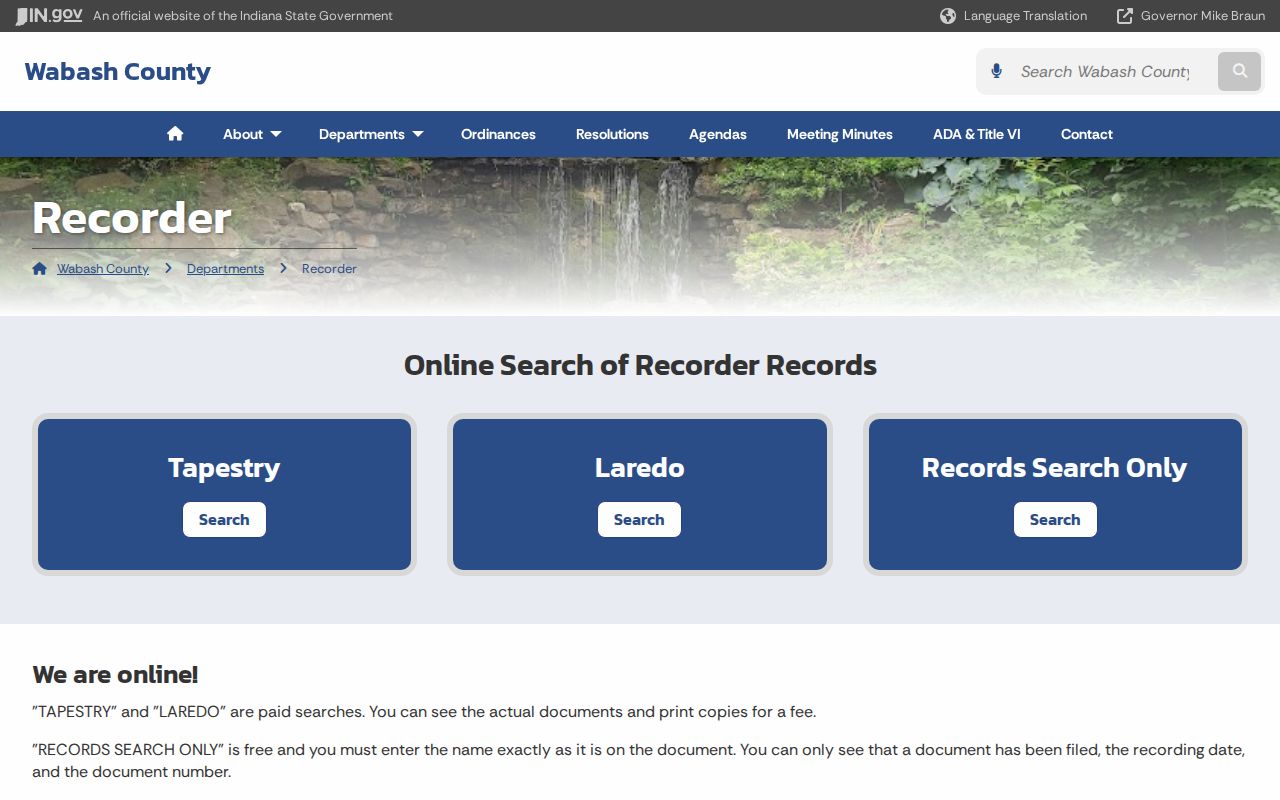
For a prior-owner search, ask one question first. Does the county's index and image range cover the transfer you are tracing? If not, move to the older county books or a verified archive source.
Indiana Prior Owner Name Variants
A party index reflects names as entered. One search form can miss a link that way. Earlier owners may appear under initials, a married or maiden name, or an estate. They may also appear as a trustee, a personal representative, or a company name. Search likely spelling variants and both grantor and grantee roles. A corporate grantee may be abbreviated on an assessor card. Yet the deed itself may write it out fully.
Compare the exact names in the instrument image. Then search the prior grantor as a grantee to find the earlier acquisition. An "also known as" phrase may not be cross-linked in the index. Keep the document's own name forms and its prior-deed reference in the worksheet. That way, later searches follow the record rather than guess at identity.
Walking an Indiana Deed Chain Backward
Each recorded conveyance points to an earlier party. A matching name alone never proves the same tract was involved. The description, recording reference, and cited prior instrument tie the links together. A clear sequence might include a warranty deed, an estate transfer, or a correction deed. A survivorship affidavit may appear as well. Mortgages and liens show up in land records too. But they belong in the encumbrance trail, not the ownership chain.
- Locate the latest deed that matches the parcel and note its grantee and legal description.
- Use that deed's grantor and prior reference to find the earlier conveyance.
- Search the earlier grantor as grantee, then match the land description again.
- Repeat until the index ends, then continue in county books, microfilm, or a verified archive collection.
- Grantor
- The party that conveyed an interest in the deed.
- Grantee
- The party that received the interest named in the deed.
- Chain of title
- The ordered sequence of recorded conveyances linked to the same land.
- Legal description
- The written parcel boundary or lot reference used to connect an older deed to the present tract.
- Quitclaim and warranty
- A quitclaim conveyed the grantor's interest without the same warranty as a warranty deed; the instrument's own terms controlled.
A link grows stronger when the prior instrument reference and grantor name align. The parcel description must agree too. If one detail changes, keep both forms in the history. Note the gap for later review rather than forcing two similar names into one identity. The chain records what the documents said about the land at each transfer.
Indiana Legal Descriptions Link Parcels
Older deeds often describe land by lot and block, subdivision name, section-township-range, or metes-and-bounds calls. They may do so rather than a street address. A later replat, lot split, annexation, or condominium declaration can change how the parcel appears. This affects both maps and tax records. The original plat and the deed's recorded book/page explain how an old tract became today's parcel.
Use the county plat book and auditor, surveyor, or GIS references to follow a changed lot description. A modern GIS map orients the search well. It cannot explain every replat or vacation. When a legal description changes, compare the cited plat and prior deed. Do this before treating two descriptions as the same property.
Indiana Estate and Sheriff Transfers
Not every past-owner chain moves from one seller straight to one buyer. A personal representative or executor deed shows a transfer made under estate authority. A sheriff's deed, by contrast, points to a sale. A survivorship or transfer-on-death affidavit can record a death-related change instead. In these cases the record may name an estate, fiduciary, trust, or entity. The person an older tax roll lists may differ.
A jump in the chain calls for side-by-side reading. Compare the probate filings and the order authorizing a transfer. Then compare the recorder instrument and the next deed. Search the fiduciary or entity name as well as the decedent's name. These records show how an interest passed. They do not settle on their own whether every claim against the property was cleared.
Indiana Historic Books and Archives
When the online deed chain runs dry, county deed books come next. Some series still sit with the recorder. Others live on microfilm. Some are in a county archive, in IARA holdings, or in a digitized genealogy collection. IARA's historical-record route opens the State Archives search and its linked collection resources. These show whether a county transferred a series and whether a film copy exists. An archived series still answers to the recorder for current instruments. So older books and new filings are separate stops.
Check that archives starting point before assuming a gap. It reveals transferred deed series and microfilm copies by county. You can then match these to your parcel number and legal description.
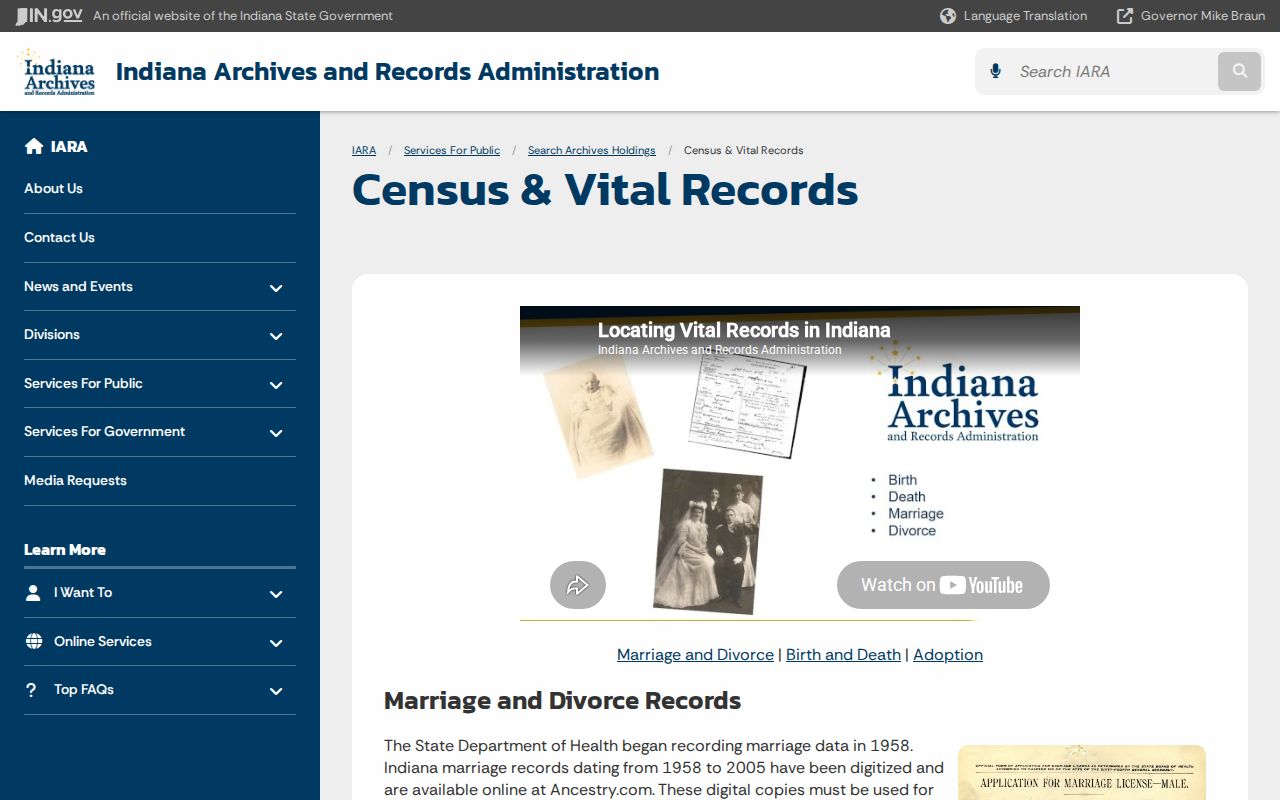
An archive search finds the series that left county hands; the recorder still holds the books that stayed local, so start there first.
For map research, the Indiana State Library's county map and plat-book guide leads to county-level map collections. Its statewide entry page lists the holdings; the county and volume still need to match your parcel before you trust any plat.
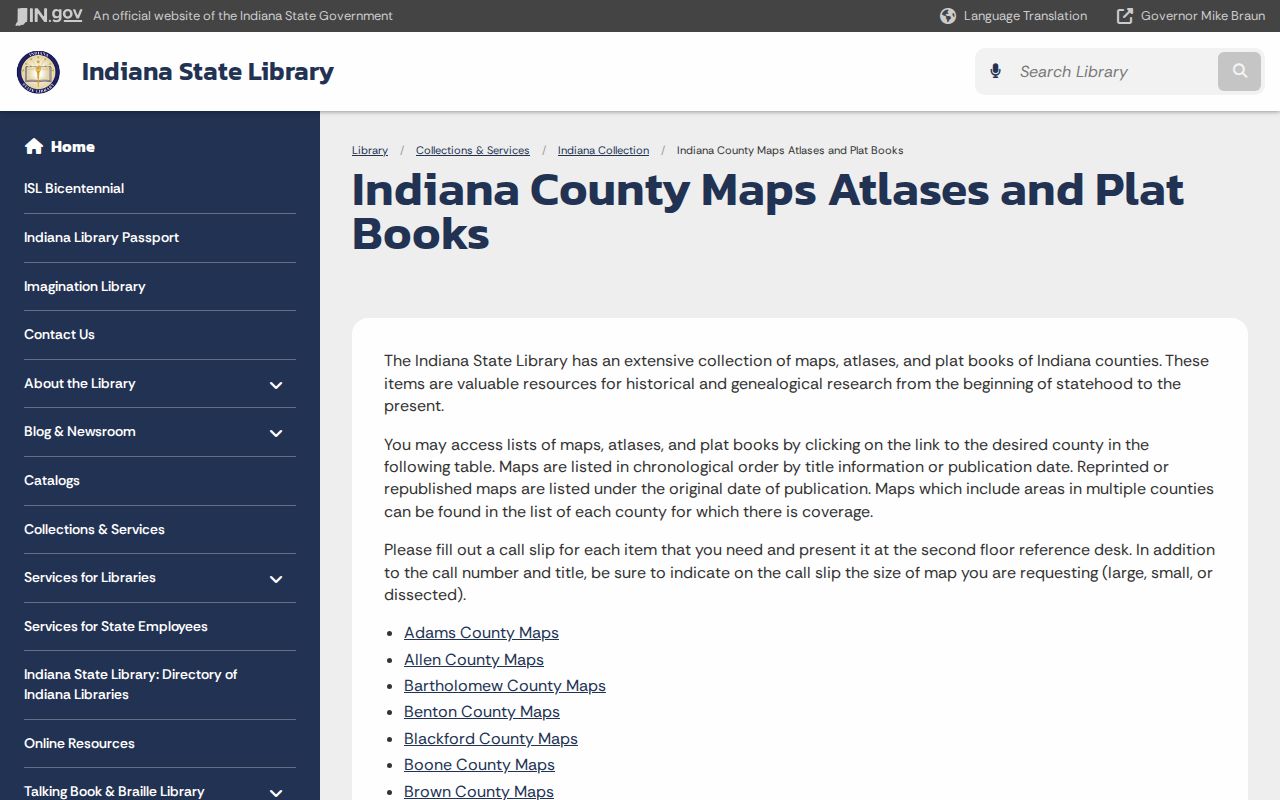
Plat books and surveys help tie old legal descriptions to modern development lots. In a boundary dispute, the recorded deed or survey controls the answer. A generalized map image never does.
How Far Indiana Ownership Records Reach
Indiana's land records began county by county. The oldest surviving deed book in any given place depends on when that county formed. It also depends on how that county's records were kept or handed off. Permanent series include Entry Books, Deed Records, Mortgage Records, Quiet Title Records, Miscellaneous Records, plat books, cemetery deeds, and assumed-name records. There is no single statewide start date for the books or the online indexes.
An online gap is not proof of destruction. Indiana relies on county retention schedules and IARA transfer records for preservation. Old material may sit at the county, rest in an archive, or survive on microfilm. No statewide courthouse fire or deed-book loss is on record. A claim about a lost volume needs evidence from that county.
State Library directories and old newspapers add context. They help when a historic parcel name no longer matches a current address. Directories list occupants, addresses, occupations, employers, and sometimes owner or renter marks. That helps place a person or street in a given year. An occupant is not always the owner of record in the deed, though. So confirm against the property records before drawing conclusions. A separate Indiana deed-records explanation covers instrument types and how to get copies.
Coverage varies by county. Tippecanoe, Cass, and Clark have different reported online ranges. Older deeds may be in books, microfilm, or archive holdings, so a portal cutoff is not the same as the first surviving record.